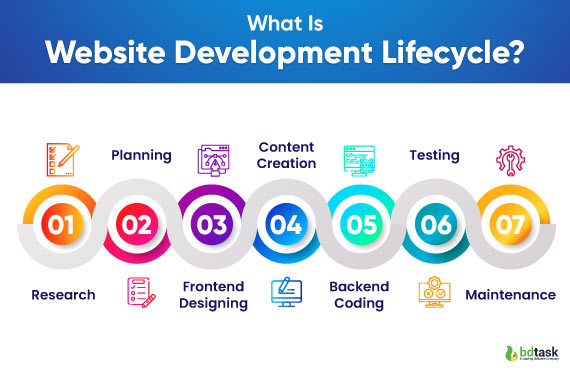
Website Development Life Cycle (WDLC)
The Website Development Life Cycle (WDLC) is a step-by-step process used by developers and agencies to take a website from a simple idea to a fully functioning, live product on the internet.
Think of it like building a house: you wouldn't just grab a hammer and start nailing wood together. You need a blueprint, a foundation, interior design, and regular maintenance.
Here is an abstract breakdown of the six major stages of the website life cycle, written for beginners.
1. Planning and Analysis
Before writing a single line of code, you must define the purpose of the website. This stage focuses on gathering information and asking fundamental questions.
The Goal: Figure out the "Why" and "Who."
What happens: You identify the target audience, the main goal of the site (e.g., selling products, blogging, or a portfolio), and what features are required.
The Output: A project sitemap (a map of how pages connect to each other) and a timeline.
2. Design and Wireframing
This stage is entirely visual. Designers create the look and feel of the website without worrying about the underlying code.
The Goal: Decide what the website will look like.
What happens: Designers create wireframes (rough black-and-white sketches of page layouts) and mockups (full-color digital designs showing exact fonts, colors, and images).
The Output: A finalized visual design approved by the client or stakeholder.
3. Development (Coding)
This is where the actual building happens. Developers take the approved visual designs and turn them into a functioning website.
The Goal: Build the functional website.
What happens: * Frontend developers write the HTML, CSS, and JavaScript to build the parts the user sees.
Backend developers set up the servers, databases, and application logic to handle data securely.
The Output: A working prototype of the website hosted on a private test server.
4. Testing and Quality Assurance (QA)
Before the public can see the website, it must be rigorously tested to ensure nothing is broken.
The Goal: Catch and fix mistakes (bugs).
What happens: Testers check the website on different devices (phones, tablets, laptops) and browsers (Chrome, Safari, Edge) to make sure it looks right everywhere. They also test links, forms, and buttons to ensure they work.
The Output: A stable, bug-free website ready for launch.
5. Deployment (The Launch)
This is the exciting moment when the website goes live for the entire world to see.
The Goal: Move the website from a private test environment to the public internet.
What happens: The website files are transferred to a production web server. The domain name (like www.example.com) is linked to that server so users can find it.
The Output: A live website accessible to the public.
6. Maintenance and Updates
A website is never truly "finished." Once it is live, it requires continuous care to stay secure and relevant.
The Goal: Keep the website safe, fast, and up to date.
What happens: Developers monitor the site for server crashes, patch security vulnerabilities, fix newly discovered bugs, and update content or features based on user feedback.
The Output: A long-lasting, healthy web application.